Blog

Vinyl and LVT have become some of the most popular choices for both homeowners and developers, both incredibly durable and stylish while being surprisingly easy to maintain.

However, they are also fairly unforgiving: any flaw in the subfloor will eventually show through the finished surface, and that is often where many installations go wrong. We have witnessed this firsthand across countless projects, including recent work involving floor compound in Cheltenham, where small defects would have caused major problems if the compound had been skipped.

The thing is that vinyl and LVT can only look their best and perform well if the foundation laid underneath them is perfectly smooth and even. Skipping this important step affects not just the looks but the longevity of performance, which is neither easy nor inexpensive to fix.

Why floor compound matters so much

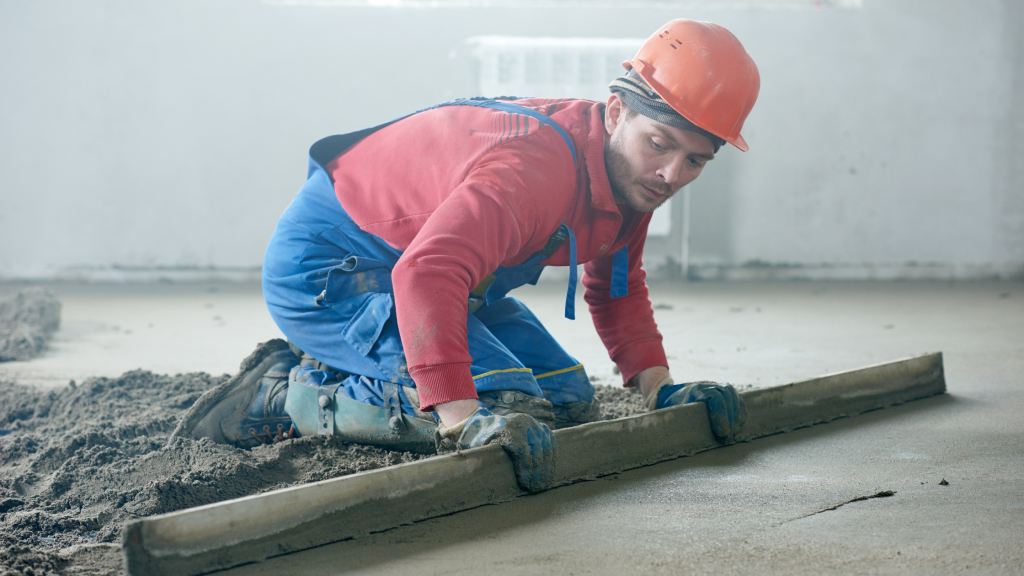
Floor compound provides a smooth, even surface for your final flooring to set exactly as it should. Vinyl and LVT are thin materials, and even slight imperfections, such as small dips, raised patches, or rough trowel marks, and/or slight uneven drying in the screed, will eventually print through the surface. This is what’s called “telegraphing,” and once it has happened, there’s no quick fix other than removing the flooring and starting again.

We also see problems when people assume their subfloor is level, simply because it looks fine to the naked eye. The truth is, screeds can dry out unevenly, old flooring can leave behind adhesive residue, and aged concrete can crack or crumble. A proper floor compound layer eliminates these risks, giving your new floor the support it needs.

What happens if you skip it?

Skipping floor compound saves a little time up front, but usually leads to much bigger problems later. The most common issues we come across include:

  • Visible bumps and dips appear within weeks of installation
  • Uneven joints where LVT planks no longer lie flat or even.
  • Premature wear in areas where the floor moves or flexes
  • Loose or lifted areas due to poor adhesion
  • Noise underfoot, particularly on rigid LVT systems

Each of these problems comes from the same source: an uneven or unprepared subfloor that wasn’t corrected before the flooring went down.

Getting It Right the First Time

A well-applied floor compound will give your vinyl or LVT the best chance to stay in place for years with no movement or defects. We always match the compound to the subfloor type, whether that be concrete, timber, or mixed materials. We’ve just finished working on a project involving floor compound in Bath; careful preparation made sure the final finish was perfect in every room.

Need Professional Help?

More than anything else, the foundation matters when it comes to vinyl or LVT that stays smooth, level, and lasts. Whether you need expert advice, proper subfloor preparation, or a high-quality compound application you can rely on, UK Screeds Ltd. has you covered.

nhancedigital@gmail.com December 1, 2025 0 Comments

The cement screed is supposed to provide a strong, stable base, and therefore, when cracks begin to show, it is generally a sign that something within the process has gone incorrectly. We have noticed this in a lot of our projects here at UK Screeds Ltd., including some recent work involving cement screed in Bristol, where small issues during early curing quickly turned into visible surface problems. Understanding why cracks form gives you a better chance of stopping small defects before they affect the wider structure of your floor.

What Causes Cracks in Cement Screed?

Cracks typically result from movement and moisture. The uneven drying of the screed causes differing shrinkage rates amongst various sections, thereby creating internal stresses. That stress shows up as fine lines on the surface, gradually spreading. Inadequate mixing ratios also lead to weakening of the material, making it less able to cope with normal foot traffic or heavy loads.

Subfloor preparation counts, too. If the base isn’t clean and level or primed properly, the screed may not bond and will start to lift eventually. And then there are the rapid temperature changes that exacerbate the situation further. The buildings that rapidly heat up from cold will make the screed expand and contract much faster than it is engineered for, adding extra strain.

Early Warning Signs You Should Catch

If you start to notice thin surface cracks within the first few days, do not ignore them. Often, they’re the first sign that deeper tension is building. Another red flag that you may notice is hollow patches. These come about when the screed has pulled away from the subfloor. Light curling at edges or corners happens frequently and may indicate uneven drying.

Catching these signs early gives you a chance to correct the issue before you install flooring on top.

How to Avoid Cracking From the Very Beginning

The best prevention always begins with preparation. We make sure the subfloor is solid and primed correctly, so the screed has a stable base to start with. Similarly, getting the right water-to-cement ratio is important. Too much water increases shrinkage, while too little affects strength. Proper curing protects the screed as it dries. Sudden heating, open windows, or switching on underfloor heating too soon can all cause cracking.

For complex layouts or demanding conditions, fibre-reinforced mixes often perform better. We’ve used them successfully in larger projects involving cement screed in Derbyshire, where the added stability helps the floor cope with wider spans and mixed temperatures during construction.

Need Expert Help?

Whether you’ve witnessed the earliest stage of cracking or want a professional installation right from the get-go, we’re here to help. Feel free to contact UK Screeds Ltd. for any advice, assessments, and expert screeding solutions to suit your project.

nhancedigital@gmail.com November 27, 2025 0 Comments
cement screed in Cheshire

Liquid screed has been the talk of the construction industry in the past few years, with people hailing its speed and suitability for underfloor heating. However, there are still instances where the old method still wins out. We still see projects here at UK Screeds Ltd. where cement screed in Cheshire is still the better option. Its tried-and-tested durability, flexibility, and performance in harsh conditions make it a foundation that still endures the test of time.

Heavy Load Environments: Strength Over Speed

For commercial and industrial constructions where machinery, shelving, or constant foot traffic is anticipated, compressive strength takes precedence. Conventional cement screed, when fully cured, provides a solid and strong surface that can support heavy loads without cracking under pressure. This makes it particularly ideal for warehouses, retail premises, and workshops where floor performance is as much of a concern as the building above it.

More Control Over Slopes and Gradients

Liquid screed’s self-levelling properties are an advantage in flush, large floors, but not all projects require a surface that is level to perfection. Some spaces need a conscious fall or gradient to take water away. For instance, consider garages, wet rooms, or outside-facing rooms. When this is the situation, old-fashioned cement screed gives installers the ability to shape and trowel a surface with accuracy, producing useful gradients that a flowable mix cannot.

Moisture Resistance and Exterior Use

The other field in which conventional screed has an advantage is water exposure. Liquid screeds, usually calcium sulphate-based, are susceptible in consistently wet situations and are inappropriate for work on the outside. Cement screed, by contrast, works well in bathrooms, utility rooms, and outside projects where moisture resistance is critical. This puts it in the more practical option when durability must be beyond the indoor setting.

Flexibility for Thickness and Finishes

Regular cement screed is also more flexible when it comes to permissible thicknesses, making it convenient for renovation work where subfloors differ in height or are not level. Its provision of a thicker build-up provides extra flexibility, especially when covering services or fitting the difference in floor levels between areas. For customers seeking a durable base but with flexibility in the finishing layer, regular screed still provides unparalleled flexibility.

Why UK Screeds Ltd. Continues to Trust Conventional Methods

Here at UK Screeds Ltd., we take pride in understanding when convention produces superior outcomes. While we are experts in liquid screed for most contemporary uses, we also have skilled teams who are proficient in hand and machine-laid cement screed in Cheshire. This enables us to suggest and implement the correct solution for every project, whether that involves the precision and efficiency of liquid screed or the robustness and flexibility of traditional methods.

For those homeowners looking for trustworthy moisture protection, or for commercial builders requiring floors to withstand decades of use, our experience with cement screed continues to show why the traditional method still has its place. Selecting UK Screeds Ltd. is selecting a partner who appreciates new technologies and the long-term value of established methods.

nhancedigital@gmail.com November 6, 2025 0 Comments
Cement screed in Bristol

With energy efficiency at the forefront of modern building, passive design is moving into the limelight. Thermal mass, which is the capacity of building products to absorb and give off heat at a slow rate, is one of the most useful tools in this system. Cement screed in Bristol is unsung but highly effective in this regard, assisting in the production of buildings that retain warmth better during winter, coolness better during summer, and are more affordable to operate.

Understanding Thermal Mass in Construction

Thermal mass is a characteristic of heavy materials like stone, concrete, and screed. They absorb heat from the warm ambient air and release heat over a longer period as temperatures decrease. The effect is a natural balancing mechanism that evens out the high points and low points of daily climatic fluctuations. In residential homes or business premises, the effect means more comfort and less reliance on mechanical systems.

Why Cement Screed Delivers Results

Cement screed works particularly well due to its weight and positioning within the structure of the floor. Paired with underfloor heating, it distributes heat well and keeps releasing it hours after the heating has been turned off. In hot summer weather, it is able to absorb excess heat, slowing the development of objectionable indoor temperatures. All these properties make it a useful, multi-seasonal solution for anyone looking to reduce energy consumption.

Advantages Exceeding Energy Efficiency

The impact of cement screed extends beyond cost-cutting. A structure that has a more consistent internal temperature is more pleasant to inhabit or work in. Companies enjoy reduced stress on air-conditioning and heating systems, and residents benefit from a consistent environment conducive to contemporary living standards. The strength, durability, and thermal mass combine to make cement screed an intelligent foundation option.

How It’s Impacting Bristol Projects

In Bristol, where sustainability in design is an increasingly important priority for both residential and commercial development, cement screed is being specified not only for its strength but for its thermal efficiency. Developers are specifying it to achieve energy savings without the sole use of mechanical systems, whereas housebuilders are discovering that it makes underfloor heating more efficient and more responsive. By using cement screed in Bristol projects, constructors are providing floors that actively add to sustainability and comfort instead of existing as a passive layer.

Building Smarter with Thermal Mass

Energy efficiency isn’t just technology; it’s also about products that work behind the scenes day in and day out to enhance building performance. Cement screed introduces the thermal mass advantage into the very heart of the building, stabilising temperatures and enabling long-term energy objectives. For anyone who’s designing for the future, it is one detail that is simply too vital to ignore.

Have questions? Contact UK Screeds Ltd. for a chat.

nhancedigital@gmail.com October 30, 2025 0 Comments

Anhydrite screeds are a popular choice in Essex and across the UK due to their high-quality finish, speedy installation, and efficiency on underfloor heating systems. But there is a concealed danger behind these advantages: ettringite formation. If left unchecked, this reaction can destroy the floor’s stability and lead to expensive repairs. At UK Screeds Ltd., we inform clients of the issue and how to avoid it happening in the first instance.

What Exactly Is Ettringite Formation?

Ettringite is a mineral that forms when anhydrite screed sulphates react with cement-bound materials, usually adhesives or levelling compounds. When water is present, this reaction is sped up, forming crystals that thrust upwards under the floor. These crystals, with time, can force coverings up, resulting in cracking, lifting, or total failure of the flooring system. Since it begins below ground level, the harm may be out of sight until it is too bad.

Why Moisture Is the Trigger

Dampness is the primary cause of ettringite formation. If a screed of anhydrite is not completely dry, it still contains water that can trigger the reaction when a cement-based product is added. This is why thorough moisture testing is essential prior to the installation of any coverings. Here at UK Screeds Ltd., we never proceed until anhydrite screed in Essex has been tested dry to the necessary standard. Omitting this stage jeopardises the long-term integrity of the floor as a whole.

Surface Preparation That Prevents Issues Early

Drying in isolation is not sufficient. Anhydrite screeds develop a surface laitance layer, which needs to be mechanically stripped away prior to application of adhesives or compounds. If neglected, the weak layer can hold in water and stop a proper bond. After laitance has been removed, primers are applied to achieve a stable barrier between the finishing products and the screed. Cumulatively, these procedures remove the circumstances in which ettringite may form.

How We Protect Projects in Essex

We have long-standing experience working with anhydrite screed in Essex, from domestic construction through to challenging commercial installations. Whatever the type of project, there is always a need for careful management of drying times, laitance removal, and sealing of surfaces. With a tried-and-tested procedure in place, we shield floors from the hidden risk of ettringite, allowing clients to be sure that their investment will pay off.

Contact Us to Build Floors That Last Ettringite development can be concealed, yet the harm caused by it is all too real. With proper preparation, it can be eliminated altogether. Leave it to UK Screeds Ltd. to provide installations that are expertly controlled at each stage. For professional advice and anhydrite screed installation in Essex, call our staff today.

nhancedigital@gmail.com October 27, 2025 0 Comments

In determining which screed is suitable for your project, fitness is as important as strength. Not all materials are suited to every situation, and anhydrite screed is no different. Even though it has numerous benefits when used indoors, there are often questions about whether it is possible to use it outdoors or in wet rooms like bathrooms. We, at UK Screeds Ltd., are committed to providing customers with a transparent view of where this product shines and where it needs caution.

What Makes Anhydrite Screed Different?

Anhydrite screed, or liquid or flowing screed, is prized for offering an extremely even and level finish. Due to its liquid consistency, it self-levels with ease, minimising the potential for voids and producing a flat surface that accommodates underfloor heating systems very well. Its drying characteristics, low shrinkage, and effective application make anhydrite screed in Cheshire a popular choice in most domestic and commercial interiors.

Limitations in Wet Conditions

In spite of these benefits, anhydrite screed is moisture-sensitive. Exposure to water over time can weaken its strength, causing it to soften or be damaged on the surface. It is therefore not advisable for external use or in permanently damp conditions like wet rooms without proper protective interventions. If the screed is subject to constant dampness, there is a great chance of long-term performance problems.

How Wet Rooms Can Still Benefit

All the same, anhydrite screed can be installed in wet rooms provided proper precautions are followed. The surface, once cured, will need to be properly prepared and sealed using a proper moisture barrier. This protective covering prevents water from penetrating through and compromising the material. At UK Screeds Ltd., our engineers use proven sealing systems that are known to protect the screed under such risky conditions. With this added step, developers and homeowners alike can reap the advantages of smooth, thermally efficient floors even in bathrooms and the like.

Expertise Counts on Local Projects

Experience is everything when dealing with sensitive applications such as wet rooms. UK Screeds Ltd. has extensive experience with anhydrite screed in Cheshire, ensuring that each and every installation is to the highest standard. Our experienced team knows how to adapt solutions to particular site conditions, whether that involves using the correct primer, adding moisture protection, or advising clients on the most appropriate screed for their scheme.

With UK Screeds Ltd., Select the Appropriate Screed with Assurance

Although anhydrite screed is not intended to be installed outdoors, it can be used perfectly well in wet areas if properly managed with the right professionals. Let UK Screeds Ltd. provide guidance and installation that will protect the integrity of your floor. For expert tips on optimal application of anhydrite screed in Cheshire, call us now and have our professionals assist in achieving long-lasting results.

nhancedigital@gmail.com October 21, 2025 0 Comments

When it comes to creating a perfectly flat, durable subfloor, nothing beats a professionally laid cement screed. At UK Screeds Ltd, we specialize in both liquid screed and traditional cement screed systems — combining decades of experience with cutting-edge techniques to serve clients across London, Leicestershire, Northamptonshire, and Nottinghamshire.

What Is Cement Screed — And Why Choose It?

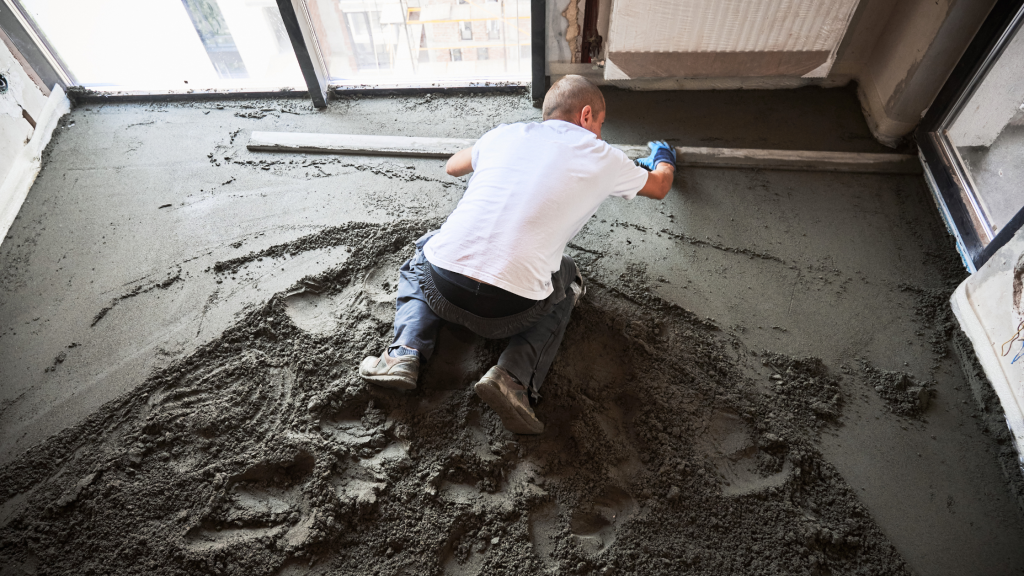
Cement screed (a mix of cement, sand and water) remains a trusted solution for many residential, commercial and industrial projects due to its strength, flexibility and ability to correct uneven substrates. It can be laid to custom depths, shaped for drainage falls, and offers excellent load-bearing capability. In conditions where weather or site control is variable, a properly mixed and cured cement screed typically gives a more forgiving margin for error compared to more moisture-sensitive alternatives.

That said, the quality of the end result depends entirely on professional preparation, precise mixing, and consistent curing. That’s where UK Screeds Ltd’s expertise comes in.

Serving Cement Screed London Projects with Precision & Reliability

In London, where property values are high and building tolerances tight, we often combine cement screed with underfloor heating systems or overlays. Our Cement Screed London services cover residential refurbishments, high-end developments, and commercial fit-outs — each receiving careful attention to detail from substrate preparation to achieving SR1 or SR2 surface regularity standards.

Expert Coverage for Cement Screed Leicestershire

Our reach extends firmly into the Midlands, including Leicestershire. Whether it’s a housing development in Leicester, a warehouse floor in Loughborough or a refurbishment in Market Harborough, our Cement Screed Leicestershire team can mobilise the right plant, materials and personnel to deliver high-quality screed services. We understand local supply chains, weather challenges and typical building practices across the region.

Reliable Solutions for Cement Screed Northamptonshire

Cement Screed Northamptonshire projects are an important focus for UK Screeds Ltd. From Northampton to Kettering and beyond, we lay floors with precision, ensuring that your flooring substrate meets all relevant tolerances and building regulations. Projects range from new builds to conversions — always executed with the same professional care and efficiency we’re known for nationwide.

Trusted Workmanship in Cement Screed Nottinghamshire

Clients in Nottinghamshire benefit from our years of experience and commitment to quality. Whether your project is in Nottingham, Mansfield or Newark, our Cement Screed Nottinghamshire services deliver robust and even finishes suitable for all flooring types — from polished concrete to timber, vinyl, or tile installations.

Why Choose UK Screeds Ltd?

  • Years of Experience: Since 2003, we’ve grown into a trusted nationwide screeding company.
  • Full Regional Coverage: Our services include Cement Screed London, Cement Screed Leicestershire, Cement Screed Northamptonshire, and Cement Screed Nottinghamshire, among other regions.
  • Technical Know-How: We meet SR1 and SR2 standards, tackle uneven substrates, cut drainage falls, and manage curing with precision.

Customer-Centric Approach: We guide every client through preparation, material selection, and project timelines to ensure top-tier results.

nhancedigital@gmail.com October 6, 2025 0 Comments

Uneven subfloors are a problem that occurs in new builds and renovations alike, and one that causes issues when trying to lay finished floor coverings. 

From a tired old concrete floor to timber floors with minimal dips and hills, an imperfect foundation can ruin the look and lifespan of your finish of choice. But do not worry because UK Screeds Ltd. has just the solution: self-levelling floor compound in Bristol and surrounding areas.

What Are Self-Levelling Compounds?

Self-levelling compounds are dedicated screeds used to produce an extremely smooth, level, and strong surface over pre-existing subfloors. 

In contrast to traditional screeds needing extensive manual levelling, these compounds flow and naturally spread out to find their own level. They perform especially well for permeable substrates, providing a better tolerance for the installation of such materials as tiles, carpet, or luxury vinyl.

The Magic of Self-Levelling in Action

The process is quite effective. 

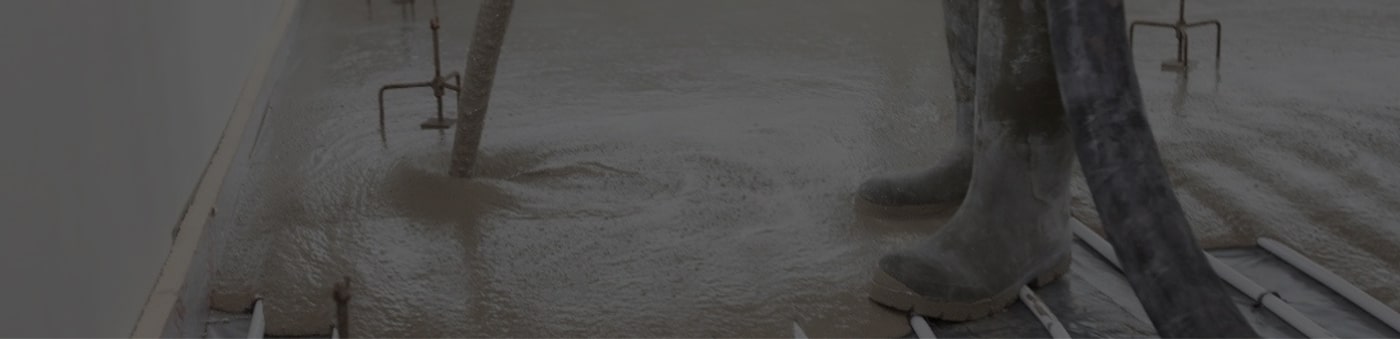
After being mixed with water to the right consistency, the self-levelling compound can be either pumped or poured on the prepared subfloor. Thereafter, it sets to work its “self-levelling” motion, flowing evenly over the surface. 

Our experienced technicians then employ a dapple bar or a spikeless roller to softly aid the flow and release any locked-in air bubbles, for a perfectly smooth finish. The added advantage is the minimised physical labour involved as opposed to conventional techniques, making them an effective time-saver. 

Depending on the given product, you can walk on the installed surface in 3 to 24 hours.

Why Are They Essential for a Flawless Finish?

These products are a necessity for attaining the immaculate subfloor demanded by contemporary top flooring finishes. They avoid cracks, delamination, or an irregular finish that can be caused by an imperfect foundation. Optimum adhesion and durability depend upon proper preparation. 

We always make sure the subfloor is free of bond breakers, clean, and stable and apply the right primer to seal porous surfaces and improve bonding. This careful preparation helps the self-levelling compound cure well and develop full strength.

Our Floor Compound Solutions in Bristol

At UK Screeds Ltd., we expertly install self-levelling compounds to convert uneven floors into absolutely smooth bases. For each floor compound in Bristol job, we guarantee exactness and effectiveness, whether residential or commercial. 

Ready for a Smooth Start?

Don’t let uneven subfloors hold up or jeopardise your project. Contact UK Screeds Ltd. today to learn how our self-levelling compound solutions can give your next flooring installation the ideal foundation.

nhancedigital@gmail.com August 7, 2025 0 Comments

We know that for any renovation or construction endeavour, the foundation matters most. 

A level and long-lasting subfloor isn’t merely an extravagance; it’s essential for the durability and beauty of your ultimate flooring. This is where standards from the industry, such as SR1 and SR2, intervene to deliver accuracy and quality right from the ground level.

Let our team at UK Screeds Ltd. walk you through these floor standards and the role of cement screed in ensuring your Northamptonshire project is a success. 

What Are SR1 and SR2 Floor Standards Actually?

In flooring nomenclature, SR1 and SR2 are surface regularity grades. 

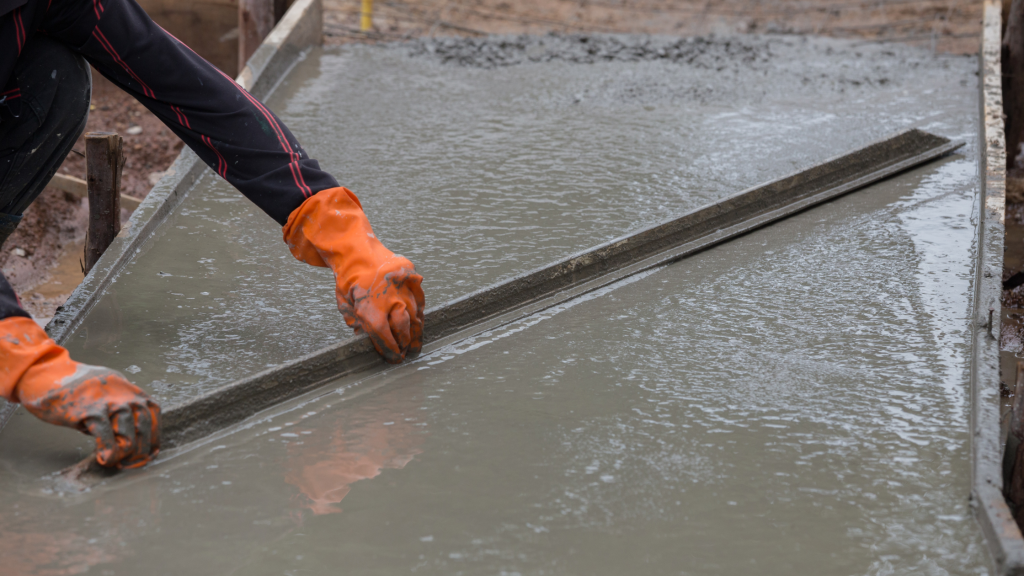
SR1 is the highest grade, with a maximum allowable deviation of only 3mm using a 2-meter straightedge. SR2 is a medium standard, with a tolerance of up to 5mm. These precise measurements are crucial because even slight imperfections in the subfloor can lead to issues with the final floor covering, from uneven tile lines to premature wear of carpets or wood. Achieving these standards ensures a flawless base, essential for both performance and appearance.

Why Cement Screed is the Foundation for Precision?

Traditional cement screed, a strong mix of cement, sharp sand, and water, is still a popular option for reaching these high standards. Its inherent characteristics find it to be ideally suited to precision finishing. 

We, at UK Screeds Ltd., appreciate its unmatched versatility, enabling us to level it to any depth and even out large undulations, and its excellent load-carrying capacity, producing a firm and rigid surface. 

Cement screed in Northamptonshire, with proper mixing and application, offers the precision application required to satisfy the high standards of SR1 and SR2, producing a solid and durable base for any floor covering.

Our Expertise in Northamptonshire Projects

At UK Screeds Ltd., we take pride in our fastidious attention to detail on all projects. Our skilled technicians utilise the latest methods to guarantee that every thickness of screed is SR1 or SR2 standard or better. We are attuned to the subtleties of local building codes and the need for immaculately prepared subfloors for the varied types of properties in the county. Our dedication to accuracy ensures we painstakingly manage the application and curing process, delivering the best possible results that last the test of time. 

Whether a new development or renovation project, our specialist knowledge of cement screed in Northamptonshire ensures an exceptional base.

The Cement Screed Advantage for Your Project

SR1 or SR2 standards through cement screed provide many advantages. It guarantees your final floor covering of choice – wood, tiles, or carpet – will be laid smoothly flat, which maximises its looks and its lifespan. This accuracy also avoids potential issues such as cracking or uneven wear, saving you time and money on eventual repairs. In the long run, it also gives you peace of mind knowing that your flooring investment is constructed over the most solid and level base possible.

Partner with UK Screeds Ltd. for Your Northamptonshire Project

For Northamptonshire projects requiring the best in floor regularity, rely on UK Screeds Ltd. to get the job done. Get in touch with us now to talk about your unique needs.

nhancedigital@gmail.com August 7, 2025 0 Comments

Even though fixing screed may be a simple process, all sites are not the same. Some offer special conditions that require more than ordinary application methods. From repair work on large undulations to designing minute drainage falls or preparing for high industrial levels, these complicated situations necessitate superior skills. At UK Screeds Ltd., we specialise in dealing with such difficult sites in Derbyshire and throughout the UK, with a perfect and lasting finish each time.

Beyond the Basics: What Makes a Site Challenging?

A “challenging site” can refer to many things. 

It can include subfloors with major undulations that need extensive levelling or having to achieve particular falls for drainage in areas like commercial kitchens or car parks. Industrial or farm environments typically require screeds with very high compressive strength to contend with heavy plant and frequent traffic. 

In addition, weather conditions, including erratic weather or sites with no reliable climate control, may impose layers of complexity on the curing procedure. Normal screeding practice simply will not be enough for these complex requirements.

Our Advanced Method of Cement Screed

At UK Screeds Ltd., we use a variety of sophisticated methods to bypass these challenges. For major levelling or constructing accurate falls, our trained technicians use controlled application processes, laying the cement screed in Derbyshire and surrounding areas to precise depths and gradients. 

Where maximum load-bearing capacity is critical, as in factory units or farm buildings, we carefully choose and apply cement screed products formulated for greater strength and durability. We also control the curing process with care, responding to site conditions in order to guarantee full development of strength and long-term performance. Our ability goes as far as including particular additives or reinforcements when required, making the screed solution tailored to the very needs of the project.

Why Expertise Is Important for Cement Screed in Derbyshire?

Selecting experts for difficult projects, especially in the case of cement screed in Derbyshire, is important. Our extensive knowledge of the properties of cement screed and our expertise in the use of advanced application methods ensure we can provide a floor that is not only precision-level but also designed to the precise performance demands of your project. 

If you’re constructing a new industrial building, remodelling a large farm building, or working on a demanding commercial project, our experience guarantees success. We pride ourselves on delivering durable, long-lasting results that stand up to the most demanding conditions, making us the go-to choice for Cement Screed in Derbyshire.

Partner with UK Screeds Ltd. for Complex Projects

Don’t risk the integrity of your demanding project. Place your trust in UK Screeds Ltd. to supply the superior cement screed solutions you require. Phone us today to learn how our knowledge can secure the success and longevity of your next demanding construction project.

nhancedigital@gmail.com August 6, 2025 0 Comments
requestcallbackImg

    Request A Callback

    Please leave your details in the form below, and we will get in touch with you soon.

    OTHER AREAS WE COVER

    GYPsol
    Gyvlon Screed
    Cemfloor
    Longfloor
    UK Screeds Ltd

    Uk Screeds Ltd was founded in Oxfordshire and is family run business due to the growing demand within the UK. We are proud to now have 11 branches throughout the Uk servicing England and Wales we are still…

    Contact Us

    Bampton Office:
    5 Thorpes Field Bampton
    OX18 2QF
    Phone: 01865 660026

    London Office:
    7 Bell Yard London
    WC2A 2JR
    Phone: 02037 810973

    Monday-Friday 9am-5pm

    This site uses cookies to deliver its services. By using this site, you agree to its use of cookies.
    More Info Accept Deny